
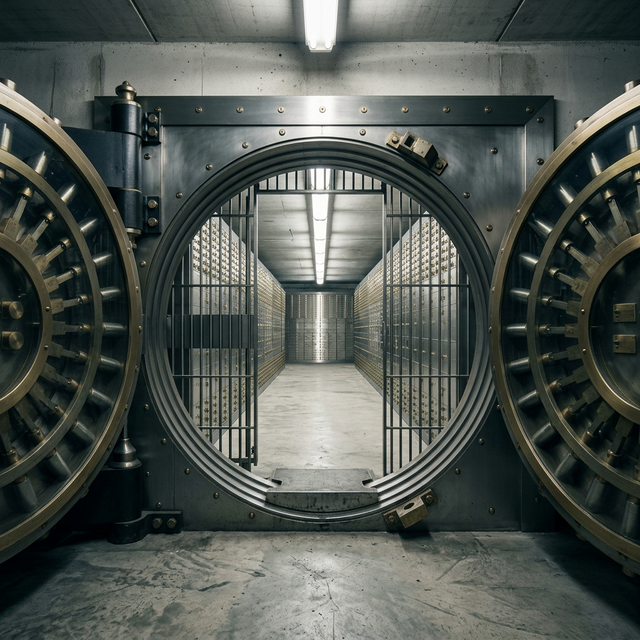
Custom Modular Vaults
We don't construct rooms; we engineer fortresses within existing infrastructure. Utilizing advanced UL-Rated lightweight panel systems, we construct scalable, high-security vault environments tailored precisely to structural load specifications and asset protection requirements.
Why Modular Over Poured Concrete?
Traditional concrete vaults take weeks to pour and cure. Modular panel systems deliver equal or superior protection in days — at 30–50% lower cost.
vs. 4–8 weeks for poured concrete. Less downtime, less disruption to your operation.
Shorter labor window, no concrete curing, no specialized formwork. Same UL rating, lower total cost.
Panels can be disassembled and moved if you relocate. Classified as a depreciable asset, not a permanent fixture.
ULTIMEX™ UHPC panels achieve full UL ratings at a fraction of the weight — installable on upper floors where concrete isn't an option.
Who Needs a Modular Vault?
Every industry has different regulatory requirements, threat profiles, and operational constraints. Here's how we engineer vault solutions for each.
Cannabis & Dispensary
State Cannabis RegulationsCannabis businesses face a unique challenge: federally restricted banking means large cash reserves must be secured on-site. State regulations mandate vault rooms with specific construction standards, access controls, and monitoring. Our modular vaults are designed to pass state inspections while giving you the flexibility to scale as your operation grows.
Key Requirements
- › Reinforced vault room for product & cash storage
- › Dual-authentication access control required
- › Surveillance camera integration at all entry points
- › Environmental controls (temperature, humidity, light)
- › Separate compartments for product vs. cash
Pharmaceutical
DEA 21 CFR 1301.72DEA regulation 21 CFR 1301.72 imposes strict storage requirements for controlled substances. Schedule I and II drugs demand the highest security — solid-walled vaults with certified doors and integrated alarm systems. Our modular vault installations are engineered to meet these specifications, and we coordinate directly with your compliance team to ensure your facility passes DEA inspection.
Key Requirements
- › Solid-walled vault rated against forced entry (Schedule I & II)
- › Vault door resistant to 20 man-hours of lock manipulation
- › Self-closing, self-locking day-gates for high-traffic access
- › Alarm system transmitting to central station or local police
- › Access restricted to minimum authorized personnel
Banking & Financial
FDIC / OCC / NCUA StandardsBanks require vaults that satisfy federal regulators, insurance underwriters, and their own risk management standards simultaneously. Modular construction gives you the flexibility to modernize branch security during renovations or expansions without the weeks of downtime that poured concrete demands. We install everything from night-depository chutes to full walk-in customer vaults.
Key Requirements
- › UL 608 Class 1 minimum for cash reserves
- › Safe deposit box compartment integration
- › Time-delay lock systems on vault doors
- › Dual-control access protocols
- › Emergency ventilation for walk-in vaults
Jewelry & Precious Metals
Insurance Carrier RequirementsJewelry stores and precious metals dealers face some of the highest theft risk profiles in commercial retail. Insurance carriers mandate specific vault ratings — and higher-rated vaults translate directly to lower premiums. We help you select the right UL class to optimize both security and insurance cost, and install custom interior configurations for efficient inventory management.
Key Requirements
- › UL 608 Class 2 or 3 for high-value inventory
- › Torch-resistant panels for overnight storage
- › Monitored alarm with rapid police response
- › Insurance-specified door ratings for premium reduction
- › Interior racking and shelving for organized storage
UL 608: Understanding Vault Ratings
Vault panels are rated under UL 608 — a different standard than the TL/TRTL ratings used for standalone safes. UL 608 measures how long a vault's walls, floor, and ceiling resist attack using tools, torches, and in some cases, explosives. The rating applies to the entire room, not just a door.
Higher vault classifications directly translate to lower insurance premiums and broader regulatory compliance. American Safe & Vault helps you select the right class based on your specific asset profile, insurance carrier requirements, and applicable regulations.
| Class | Resistance Time | Attack Methods | Typical Application |
|---|---|---|---|
| Class M | 15 minutes | Tools | Light commercial, small business cash storage |
| Class 1 | 30 minutes | Tools + Torches | Banking, pharmaceutical (DEA Schedule II), cannabis |
| Class 2 | 60 minutes | Tools + Torches + Cutting | Jewelry wholesale, high-value pharmaceutical, precious metals |
| Class 3 | 120 minutes | Tools + Torches + Explosives | Diamond vaults, government classified, federal depositories |
UL-Rated Modular Panel Systems
We manufacture three UL-listed modular panel systems — ULTIMEX™, FORTIVEX™, and STONEVEX™ — each engineered for different security, weight, and installation requirements.
ULTIMEX™
Ultimex™ combines UHPC technology with modular vault construction — delivering the thinnest, lightest, and strongest panel in our lineup. UL-listed across all classes, it's the go-to choice for high-rise retrofits and any installation where weight is a concern.
| Class | Thickness | Weight (psf) |
|---|---|---|
| Class M | 2" | 28 lbs |
| Class I | 2.25" | 32 lbs |
| Class II | 3.5" | 49 lbs |
| Class III | 6.5" | 91 lbs |
FORTIVEX™
Fortivex™ delivers proven organic composite construction with solid UL-listed performance. A reliable mid-range solution that balances weight and security for ground-level and upper-floor commercial installations.
| Class | Thickness | Weight (psf) |
|---|---|---|
| Class M | 3.5" | 23 lbs |
| Class I | 5.5" | 29 lbs |
| Class II | 9.5" | 44 lbs |
| Class III | 12" | 75 lbs |
STONEVEX™
Stonevex™ provides the strength and heritage of traditional concrete vault panel construction. The proven, time-tested choice for maximum structural security in ground-level and basement applications.
| Class | Thickness | Weight (psf) |
|---|---|---|
| Class M | 3" | 40 lbs |
| Class I | 4" | 55 lbs |
| Class II | 6" | 82 lbs |
| Class III | 9" | 125 lbs |
Standard panel length limit is 14′ for all classes due to access and installation considerations.
Side-by-Side Comparison
| U.L. Class | ULTIMEX™ Thickness / lbs. per sq. ft. | FORTIVEX™ Thickness / lbs. per sq. ft. | STONEVEX™ Thickness / lbs. per sq. ft. |
|---|---|---|---|
| Class M | 2" / 28 lbs. | 3.5" / 23 lbs. | 3" / 40 lbs. |
| Class I | 2.25" / 32 lbs. | 5.5" / 29 lbs. | 4" / 55 lbs. |
| Class II | 3.5" / 49 lbs. | 9.5" / 44 lbs. | 6" / 82 lbs. |
| Class III | 6.5" / 91 lbs. | 12" / 75 lbs. | 9" / 125 lbs. |
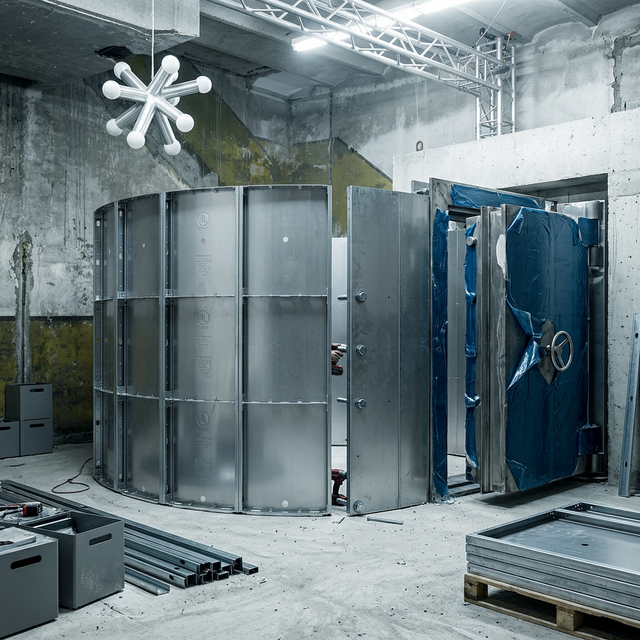
Phase 1
Panel Assembly
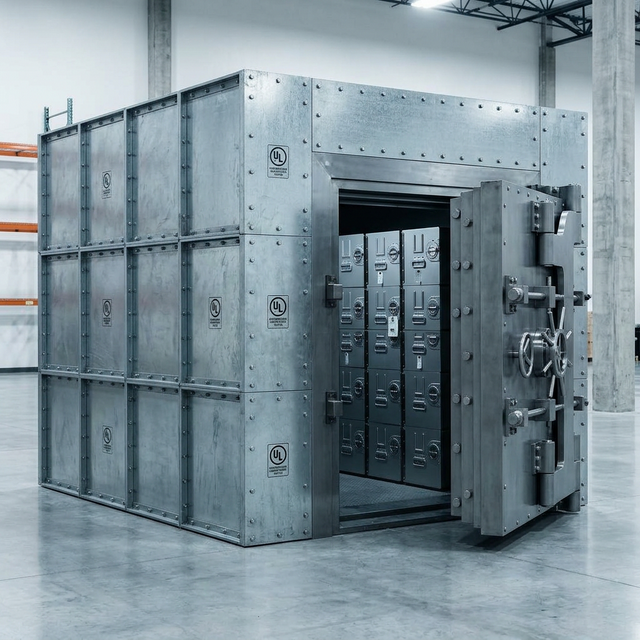
Phase 2
Structure Complete
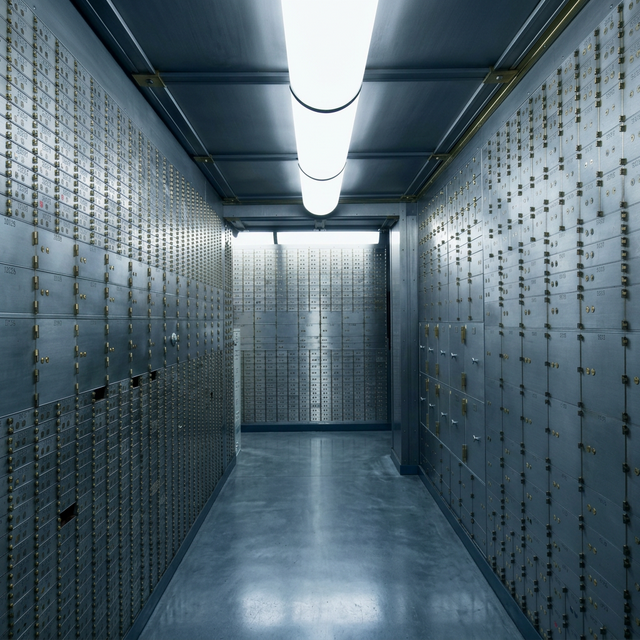
Phase 3
Finished Vault
What Drives the Cost of a Modular Vault?
Every vault project is custom. Here are the primary factors that shape the investment — we walk you through each during your free consultation.
Vault Size & Capacity
Square footage and ceiling height determine the number of panels needed. Walk-in customer vaults cost more than compact storage rooms.
Panel Class (UL Rating)
Higher UL 608 classes use denser materials and more complex construction. Class 3 panels cost significantly more than Class M, but may lower your insurance premiums enough to offset the difference.
Vault Door Rating
The door is often the single most expensive component. Higher-rated doors with time-delay locks, day-gates, and dual-authentication add cost but are frequently required by regulation.
Site Preparation
Floor reinforcement, demolition of existing walls, electrical rough-in, and HVAC integration all contribute to site prep costs. Upper-floor installations may require structural engineering review.
Environmental Controls
Cannabis product storage, pharmaceutical inventory, and archival document vaults often require temperature, humidity, and ventilation systems integrated into the vault design.
Access & Security Integration
Biometric readers, access logs, surveillance integration, alarm monitoring, and network connectivity for remote management add layers of cost — and compliance assurance.
The Installation Protocol
Site Survey & Load Analysis
We conduct rigorous site evaluations to determine structural ingress capabilities and point-load tolerances, ensuring the selected panel class complies with building codes. For upper-floor installations, we coordinate with structural engineers to verify load-bearing capacity.
Panel Fabrication & Door Selection
Based on the blueprints, modular panels are fabricated off-site to exact dimensions, along with the corresponding UL-rated vault door, frame, and any integrated HVAC/ventilation porting. We select the panel system (ULTIMEX™, FORTIVEX™, or STONEVEX™) based on your structural and security requirements.
Discreet On-Site Assembly
Our bonded contractors arrive after-hours or during scheduled low-traffic periods to weld and bolt the structural panels into a monolithic, six-sided enclosure. This typically takes 3–5 days for standard installations.
Door, Lock & Security Integration
The vault door is installed, locks are programmed, and all security systems are integrated — alarm sensors, access control, surveillance, and environmental monitors. We test everything on-site and provide full UL certification documentation for your insurance carrier.